 Ashley Elle
Rich Engler has spent most of his life somewhere near the noise.
Near amplifiers humming backstage. Near sold-out crowds vibrating concrete floors. Near managers screaming into phones. Near artists trying to hold themselves together five minutes before walking onstage in front of thousands of people. Near the kind of chaos most people only glimpse for two hours from an arena seat before driving home.
For more than five decades, he helped build the soundtrack of Pittsburgh.
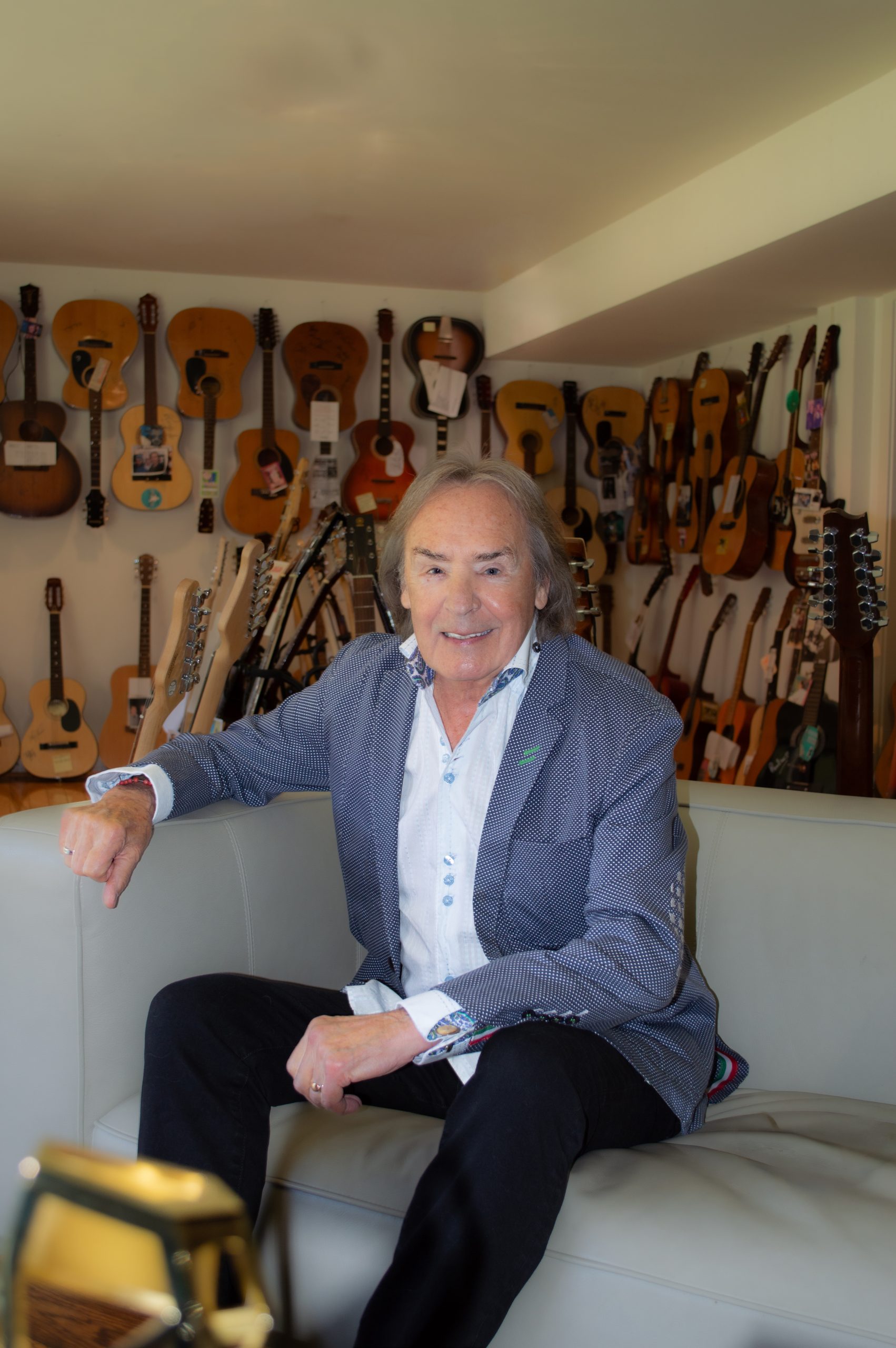
And somehow, sitting inside his home surrounded by one of the most jaw-dropping collections of signed guitars imaginable, Engler still comes across less like a corporate music executive and more like the guy who simply never stopped loving rock and roll.
The first thing you notice walking into Rich Engler’s house is that it does not feel like a museum, even though parts of it probably could be.
Signed guitars line the walls like artifacts from another era. Not replicas. Not decorative pieces bought for aesthetics. Real instruments tied to real moments in music history. Some are signed so heavily they almost stop looking like guitars altogether. Others are accompanied by backstage passes, old concert posters, photographs, ticket stubs, handwritten notes, memories frozen under glass.
The collection is overwhelming without feeling pretentious. Somehow, it still feels lived in.
There’s warmth to the room – the kind that exists in houses where stories are constantly being told.
His wife, Cindy, sits nearby during the photoshoot, smiling knowingly whenever certain names or stories come up. Their adorable dog, Roxy, wanders through the room intermittently, completely unimpressed by the fact that her owner once negotiated with some of the biggest musicians on earth.
At one point, while Engler points out a guitar signed by AC/DC and casually shares the story behind it, Roxy rolls onto her back demanding attention. It feels strangely fitting.
You expect someone with this résumé to feel larger than life. And in many ways, Engler absolutely does. This is a man who promoted more than 6,000 concerts and events across 53 years in entertainment. He worked with everyone from The Rolling Stones to Bruce Springsteen, Bob Dylan, Pink Floyd, Elton John, Billy Joel, Bob Marley, Cher, Aerosmith, and seemingly every other legendary act that mattered during rock’s most excessive and unpredictable decades.
But sitting across from him in his home, what emerges is a deeply Pittsburgh story.
Engler grew up in Creighton, Pennsylvania, a working-class town northeast of the city where steel-town practicality mattered more than celebrity fantasy. His father worked in the glass industry. He studied art education for a time at Youngstown State and Carnegie Mellon before realizing the traditional path wasn’t going to hold his attention for very long. Music already had him.
Long before he became one of the most powerful concert promoters in America, he was a drummer in a garage-rock band called The Grains of Sand. That detail means more than it initially seems to.
You can still hear the musician inside him in the way he talks about performers. Engler never talks about artists like inventory or business assets. Even now, decades later, he speaks about them like someone who fundamentally understands what it feels like to stand under stage lights with your pulse racing.
That musician’s perspective may have become his secret weapon. The concert business during the late 1960s and 1970s was not the polished corporate machine it is today. It was volatile, unpredictable, occasionally dangerous, and fueled almost entirely by instinct. Tours collapsed unexpectedly. Artists disappeared. Managers panicked. Weather wiped out profits. Security situations spiraled out of control. Promoters routinely gambled enormous amounts of money on single nights.
Rich smiles while describing parts of it now, but there’s an undercurrent of disbelief in some of the stories, like even he occasionally wonders how any of them survived it.
Modern touring operates on algorithms, analytics, sponsorship packages, and billion-dollar infrastructure. Back then, sometimes it felt like organized chaos held together with charisma and sheer nerve.
In 1973, Rich partnered with legendary promoter Pat DiCesare to form DiCesare-Engler Productions, a company that would eventually become synonymous with live entertainment in the tri-state area.
For years, seeing “Produced by DiCesare-Engler” on advertisements became part of the cultural fabric of the area.
It’s difficult now to fully explain how important Pittsburgh became to the live music industry.
Younger audiences know the city today as a strong concert market. But during the 1970s and 1980s, Pittsburgh transformed into one of the most important rock cities in America.
The audiences were loyal. The radio stations mattered. The ticket sales were enormous.
The energy was blue-collar but electric.
Artists understood that Pittsburgh crowds showed up loudly and passionately in ways many cities didn’t. Engler helped build that reputation.
Venues like the Civic Arena, Three Rivers Stadium, and the Stanley Theatre (now the Benedum Center) became central to the city’s identity as a touring destination. Under DiCesare-Engler’s leadership, the Stanley Theatre was named the number one mid-sized concert auditorium in the US by Billboard.
That sentence alone feels almost surreal. Pittsburgh. Number one in America. And Rich Engler was right in the middle of it.
What makes him fascinating, though, is that he doesn’t tell stories like someone trying to impress you; he tells them like someone still genuinely amazed he got to witness all of it firsthand.


Unlike many music-industry veterans, Rich doesn’t seem particularly interested in preserving celebrity mythology. If anything, he spends more time humanizing the stars than glorifying them.
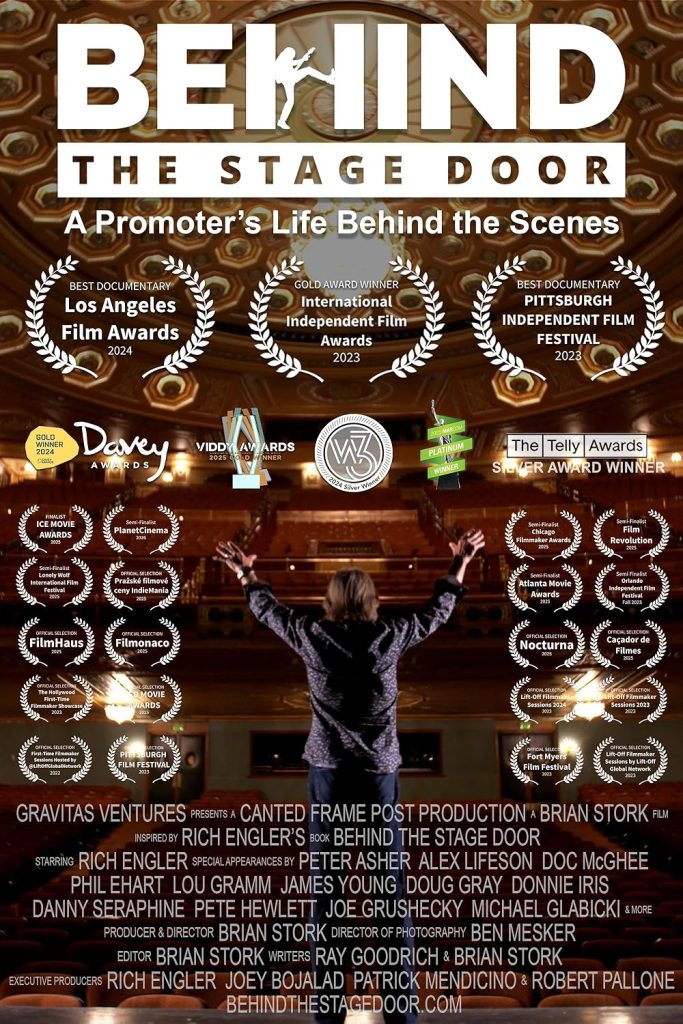
That theme runs heavily through his book, Behind the Stage Door (now adapted into a documentary), which functions less like a polished memoir and more like a sprawling oral history from rock and roll’s wildest years.
The stories aren’t sanitized. Artists appear simultaneously exhausted, vulnerable, insecure, and outright funny. Sometimes they even come across as deeply uncertain despite performing in front of massive audiences.
One story that resurfaces in the book involves Engler giving Bob Dylan a backstage pep talk before a Pittsburgh performance when Dylan reportedly felt disconnected from audiences and unsure about the show ahead.
It’s the kind of anecdote that reveals what promoters often really were back then. They were not just businessmen, but psychologists, negotiators, mediators, crisis managers, and confidence-builders. Sometimes all in the same night.
Looking around Engler’s house, you begin realizing that the pieces of memorabilia are not really trophies. They’re evidence of relationships and trust. Artists continued working with him for decades and in an industry built on enormous egos and constant turnover, that says something.
At one point, sunlight cuts across the room and catches a signature on an instrument hanging nearby. The ink glows faintly against the finish. Engler pauses to tell a story about it, and suddenly the object stops feeling collectible and starts feeling personal.
That distinction is important. The stories are never about fame, but rather they’re about significant moments in his career.
Backstage tension before a show. An artist doubting themselves. A disastrous logistical problem somehow getting solved at the last second. The tales themselves are incredibly captivating. But the philosophy underneath them is what makes Engler truly fascinating as both a promoter and storyteller.
He understands what many people forget about live music: concerts are emotional architecture. For a few hours, strangers become synchronized emotionally. Entire arenas move together, sing together, and react together. Promoters help build the conditions for that experience to happen.
In Engler’s world, the concerts were never just performances. They were shared experiences people carried with them long after the lights came up.
Listening to him speak, it becomes obvious that many of Pittsburgh’s most unforgettable nights passed through rooms exactly like this one first. Outside, the city continues evolving like it always has. New artists emerge. New venues open. New generations discover live music for the first time. And somehow, Rich Engler’s influence exists inside all of it.
Long before concerts became content, he helped build something far more human. For decades, Rich Engler didn’t just bring music to Pittsburgh. He helped create the kind of nights people spend decades talking about.