 Ashley Elle
There are plenty of beautiful barns scattered across the Pennsylvania countryside. Many have stood watch over generations of harvests, weathered countless winters, and witnessed family histories unfold. But most never become the center of a story that stretches from nearly two and a half centuries of agricultural history to one of country music’s biggest stars.
That’s exactly what’s happening at 1846 Farms in Latrobe.
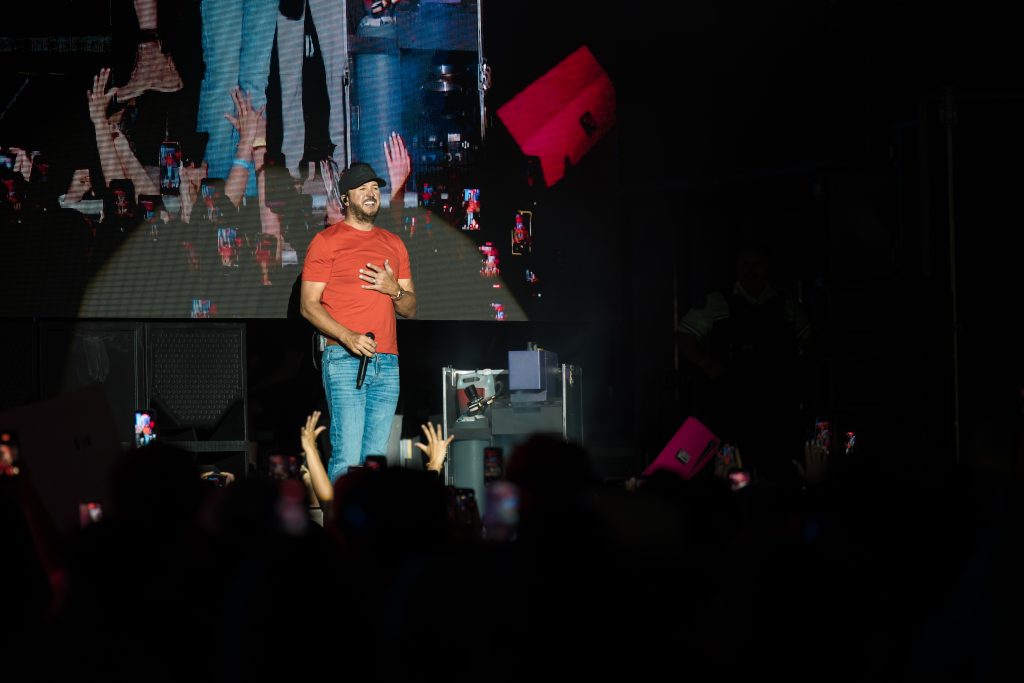
On September 17, an estimated 20,000 fans will descend on the family farm as Luke Bryan’s 2026 Farm Tour makes its Pennsylvania stop in Westmoreland County. It’s a remarkable milestone for a property that, just a few years ago, was buried beneath overgrowth and years of neglect.
For Aleisha Stas and her parents, however, the concert isn’t the destination. It’s simply one chapter in a much bigger story.
That story is about preserving history instead of replacing it. About believing an old barn still has another century of life left in it. About investing in a community before ever opening your doors for business. And perhaps most importantly, it’s about proving that sometimes the biggest opportunities arrive while you’re simply doing the work.
Long before it became known as 1846 Farms, the property served as a nursery where shrubs, trees, and ornamental plants were cultivated. For roughly 250 years, it has remained active agricultural land in one form or another.
But time hadn’t been especially kind.
After the previous owner passed away, the property slowly deteriorated. Fields became overgrown. Buildings sat idle. Nature began reclaiming what generations of farmers had built.
When Aleisha’s family purchased the property in 2022, they weren’t just buying land. They were accepting responsibility for restoring a piece of Pennsylvania history that was in disrepair and had become severely overgrown.
The past four years have been dedicated almost entirely to reversing that decline.

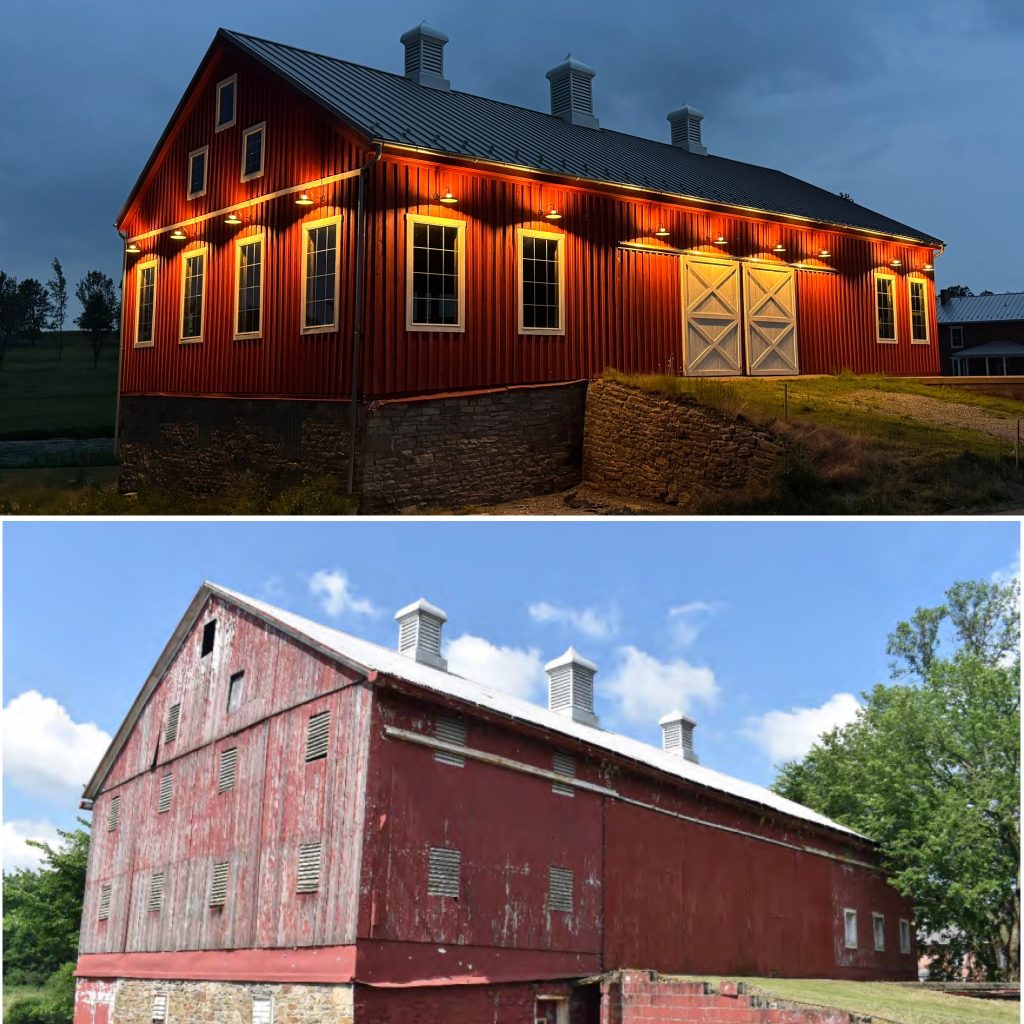
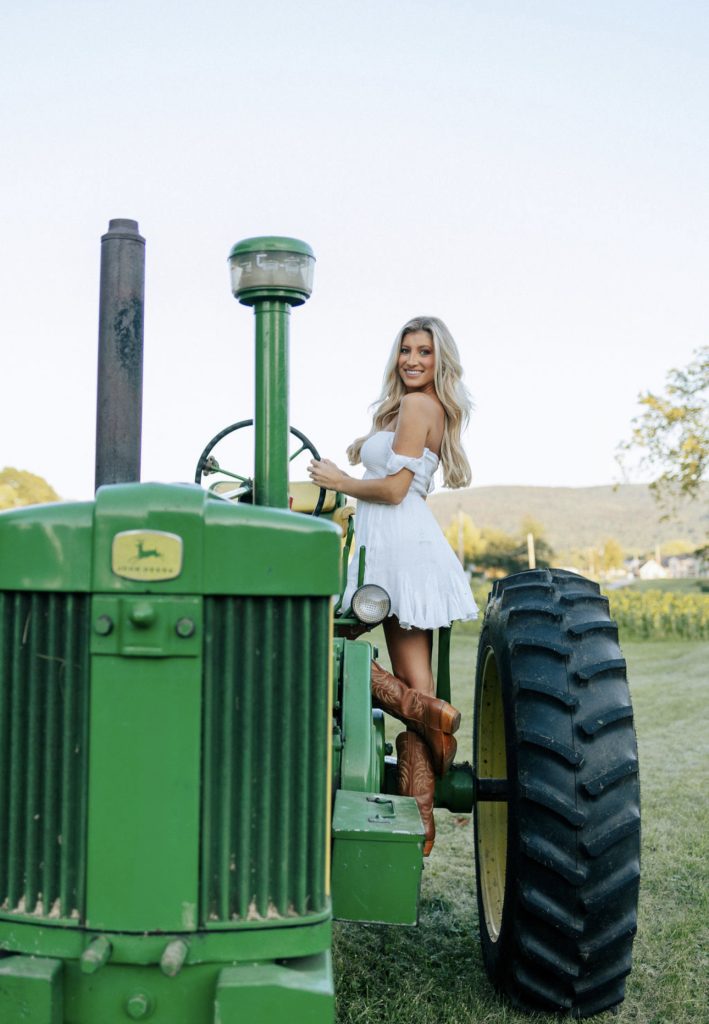
Fields have been excavated and returned to productive farmland. Sunflower crops now grow where brush once dominated. The original farmhouse is being restored, and the property’s namesake barn, built in 1846, is undergoing an extensive rehabilitation designed to preserve its historic character while preparing it for an entirely new purpose. It’s a labor-intensive process that requires equal parts vision and patience.
Walk through the construction site today, and it’s immediately clear that this isn’t a project interested in shortcuts.
Rather than demolish and rebuild, the family has focused on preserving as much of the original structure as possible.
The barn’s original Pennsylvania stone foundation has largely remained intact. Where new materials have been required, they’ve intentionally sourced Pennsylvania stone to ensure the additions complement the original architecture rather than compete with it.
The most eye-catching addition is a new silo connected to the event space.
Inside, visitors will eventually find a spiral staircase, an elevator, climate-controlled comfort, and perhaps most meaningful of all, a mural telling the story of the farm’s evolution across generations.
Rather than simply creating a beautiful venue, the family wants guests to understand where the property came from.
“We’re hoping to paint a mural on the inside of the silo that shows the history of the farm and how it’s adapted over time,” Stas explained. That philosophy extends throughout the entire project. The goal has never been to erase the past. It’s been to honor it.
Although weddings will undoubtedly become a major part of the venue’s future, Stas says the long-term vision extends well beyond ceremonies and receptions.
The family hopes to create a destination centered around agritourism, one that reconnects visitors with farm life while celebrating the region’s agricultural heritage.
Future plans include pumpkin patches, corn mazes, pick-your-own produce experiences, seasonal festivals, and family-friendly events that encourage people to spend an afternoon (or an entire weekend) on the farm. It’s an approach that feels increasingly relevant as many families seek authentic outdoor experiences and opportunities to connect with local agriculture.
Rather than existing as a venue that’s busy only on weekends, 1846 Farms hopes to become a year-round destination.
Of course, none of those plans anticipated hosting one of country music’s biggest stars before officially opening.
Earlier this year, Stas received a call that seemed too unbelievable to take seriously. In fact, she initially wondered whether someone was playing an elaborate April Fool’s joke.
Instead, it was Luke Bryan’s team. Since launching the Farm Tour series in 2009, the country superstar has intentionally chosen rural communities that rarely host events of this scale, celebrating farming while bringing economic activity to agricultural regions.
So how did a farm that isn’t even officially open become one of this year’s tour stops? It happened because Stas simply documented the restoration process and people noticed.
She regularly shares updates about life on the farm through social media, highlighting both the extensive renovation process as well as the natural beauty of the farm itself.
Those videos caught Josh Cunningham’s attention. The Cunningham family’s farm hosted Luke Bryan’s Farm Tour in 2024. When he discovered Stas’ content, he recommended her to Bryan’s team as they searched for another Pennsylvania location.
Originally, organizers expected the venue to accommodate roughly 12,000 attendees. Then tickets went on sale. Demand proved so overwhelming that planners realized almost immediately they needed to think bigger.
Today, preparations are underway to expand capacity to approximately 20,000 people, requiring nearly 30 acres of additional land to be prepared in just weeks. That kind of timeline would challenge even the largest construction teams. Then came another obstacle. The family’s John Deere excavator broke down at exactly the wrong moment.
Fortunately, another Pennsylvania company stepped in.
Cleveland Brothers donated heavy equipment that allowed work to continue without losing precious time. For Stas, it became another reminder that community support has been woven throughout the entire renovation.
“All of our contractors have been amazing,” she said. “They’ve been working tirelessly to help us get this done by September 17th.”
It would be easy to focus solely on Luke Bryan. After all, five-time Entertainer of the Year, American Idol judge, and one of country music’s biggest names isn’t someone you expect to find performing in a pasture outside Latrobe. His 2026 Farm Tour includes only four fall stops nationwide, with 1846 Farms serving as Pennsylvania’s featured location.
But the broader impact may be even more significant. Hotels across the region are already anticipating increased bookings. Restaurants, bars, retailers, and local businesses stand to benefit from thousands of visitors.
“I think a lot of people are so excited that we have such an influx of people coming into our area,” Stas said. She isn’t exaggerating.
Events of this size create ripple effects that extend far beyond ticket sales. Visitors need lodging. They buy meals. They shop. They explore neighboring communities. For one evening, a stretch of farmland becomes an economic engine, exactly what the Farm Tour has been all about for nearly two decades.
Perhaps the most surprising part of the entire project is that the family isn’t approaching the concert as a business opportunity. Quite the opposite. Stas emphasized that the event is being treated as a nonprofit endeavor.
Any proceeds generated through their involvement will be donated to the Cystic Fibrosis Foundation through Pittsburgh’s 50 Finest campaign and to the National FFA Organization, supporting future generations of agricultural leaders.
It’s an approach that perfectly reflects the spirit behind both the Farm Tour and 1846 Farms.The concert may bring national attention. But the family’s priorities remain firmly rooted in service to their local community.
Long after the concert stage is dismantled and the crowds head home, those restored fields will still be there. The barn will continue welcoming weddings, celebrations, and families. Children will someday wander pumpkin patches. Visitors will climb a spiral staircase that tells the story of generations who cared enough to keep this place alive.